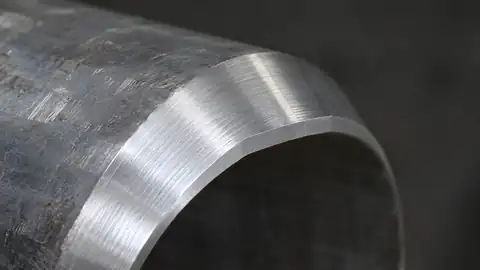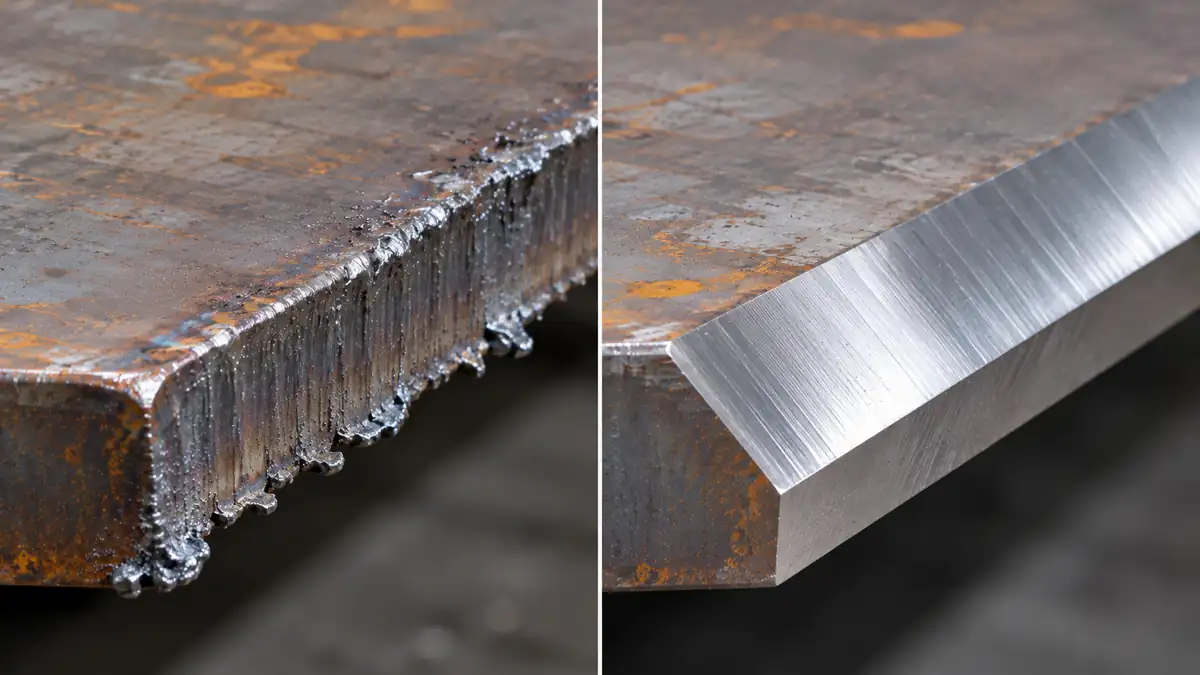
Cold milling produces a bevel that can be welded immediately: there is no heat-affected zone, no oxide layer and the angle and land are held by the machine. Flame and plasma beveling are faster per metre of cut, but the edge usually needs grinding before welding, and on stainless or alloy steels the heat-affected material often has to be removed. Which method is cheaper depends on how much finishing the thermal bevel needs.
What happens at a thermally cut edge
An oxy-fuel or plasma torch melts and blows away metal. The cut face is left with a thin oxide layer, some dross on the underside and a band of metal that was heated close to its melting point. On carbon steel this band can harden; on stainless steel it can lose corrosion resistance; on Cr-Mo steels it may need to be removed entirely before welding. Most fabrication procedures therefore call for grinding the thermally cut bevel to bright metal.
What a milling machine does differently
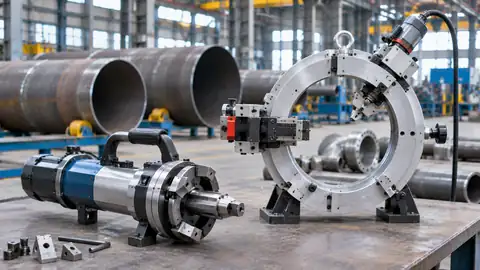
A beveling machine removes the metal mechanically with a carbide-insert cutter head. The cutting heat goes into the chips, not the plate, so the base material is unchanged. The bevel angle is set on the machine, and the land is set by depth of cut, which means the geometry is the same from one end of the plate to the other.
| Flame / plasma bevel | Cold-milled bevel | |
|---|---|---|
| Heat-affected zone | Yes | No |
| Oxide layer and dross | Yes, needs grinding | No |
| Angle and land consistency | Depends on torch setup and plate flatness | Set by the machine |
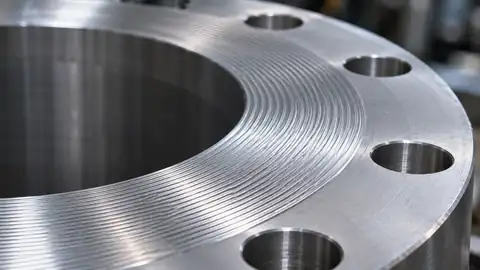
| Surface finish | Rough, striated | Ra 3.2–6.3 typical |
| J and U grooves | Difficult | Possible with the right head |
| Fumes and sparks | Yes | No, chips only |
Where thermal cutting still makes sense
For very long straight bevels on carbon steel that will be ground anyway, or for bevels cut in the same operation as the part profile on a CNC cutting table, thermal beveling remains efficient. The calculation changes when finishing time, rework from inconsistent fit-up and welding consumables are included.
Counting the full cost per metre
- Cutting time per metre.
- Grinding time to bright metal and to correct the land.
- Extra weld metal deposited because of an uneven or oversized groove.
- Repairs caused by lack of fusion at inconsistent lands.
Shops that bevel daily usually find the second and third items are where milled bevels save the most time.
Frequently asked questions
Does a milled bevel need grinding before welding?
Normally no. A cold-milled bevel has no oxide or heat-affected layer, so it can be cleaned and welded directly.
Is cold beveling suitable for stainless steel?
Yes. Because no heat enters the plate, the corrosion resistance of stainless steel at the edge is not affected.
How smooth is a milled bevel?
Typically Ra 3.2–6.3 µm, depending on cutter, feed and material.