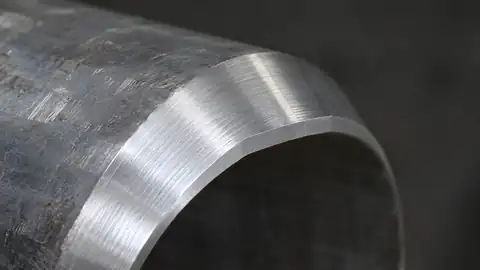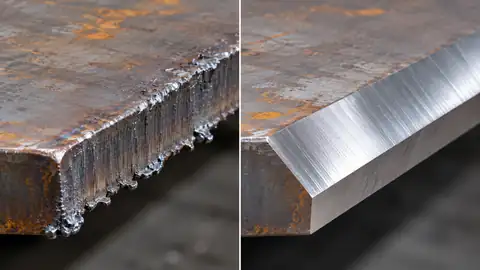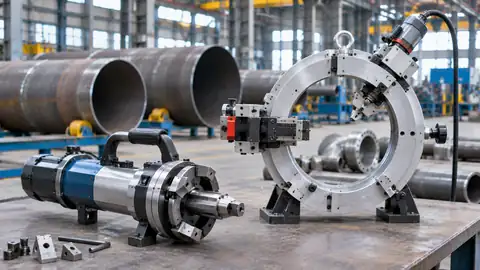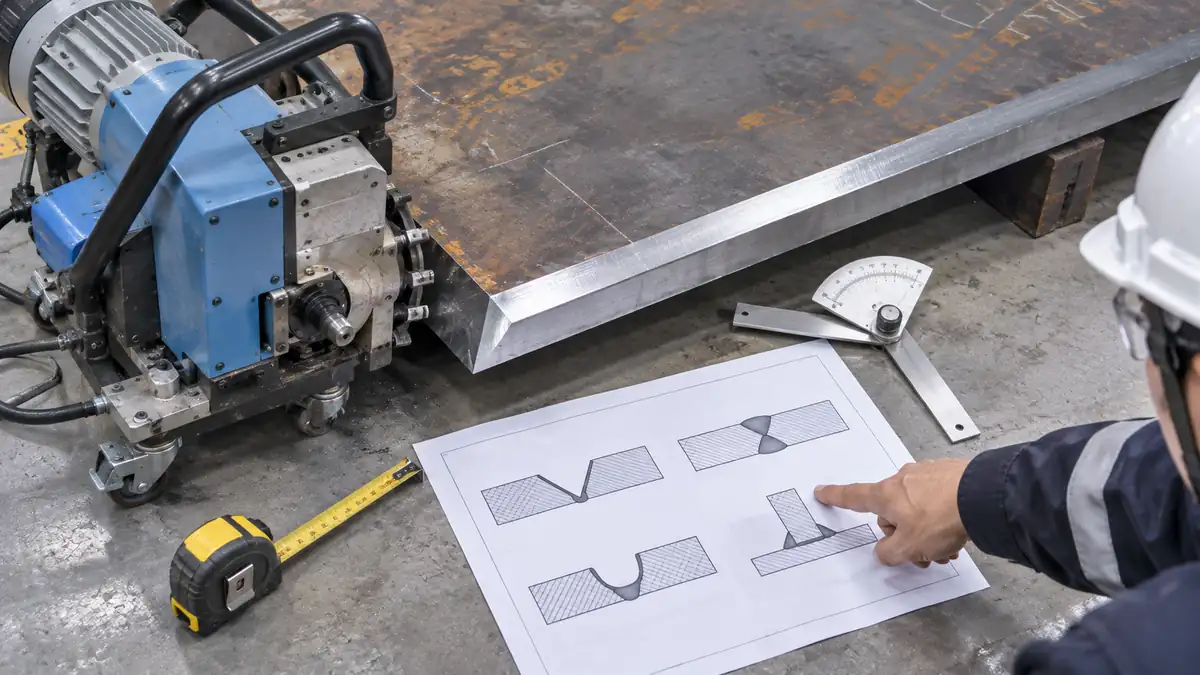
Start with the thickest plate and the widest bevel you need to cut, then the joint types (V, K, X, U, J) and the bevel angle range. Those four numbers narrow the choice to one or two machine sizes. Plate size, production volume and power supply decide between a handheld, a walking or a CNC machine.
1. Plate thickness
Every machine has a clamping range. Pick a model whose range covers your thinnest and thickest plate with some margin. Very thin plate (under 6 mm) can vibrate in walking machines; stationary or handheld units suit it better.
2. Bevel width
Bevel width is the slanted face measured along the bevel. For a 30 mm plate with a 37.5° bevel and a 2 mm land, the bevel face is about 35 mm long. Machines cut 15–30 mm per pass, so wide bevels take two or three passes; check both the single-pass and maximum width.
3. Bevel angle range
Most weld preps sit between 15° and 45°. If you also need vertical facing or J-preps, choose a head with a 0–90° range.
4. Joint types
| Joint | What you need |
|---|---|
| V / Y | Any plate beveler |
| K / X (both sides) | Up-and-down head, or flip the plate |
| U / J | Head and cutter designed for radius grooves |
| R2 / R3 edges | Edge rounding machine |
5. Plate size and volume
- Small parts in bulk: stationary auto-feed beveler.
- Large plates, mixed jobs: automatic walking machine.
- Long plates, repeated every day: CNC edge milling machine.
- Curves, holes and assembled work: handheld edge miller.
6. Power, materials and service
Confirm voltage, phase and frequency (we build for 220, 380, 415 and 440 V). Tell us the material grade: stainless, duplex and high-strength steels affect cutter choice and feed. Finally, ask about cutter inserts, spare parts stock and video support before you buy.
Information to include in your quote request
- Material grade and thickness range.
- Joint types and bevel angles, ideally with a sketch.
- Typical plate length and width.
- Metres of bevel per shift.
- Power supply at your site.
Frequently asked questions
What is the most important factor when choosing a plate beveler?
The maximum plate thickness and maximum bevel width you need to cut. These set the machine size.
Can one machine cut both K and X bevels?
Yes, if it has an up-and-down (turnable) head, such as the GMM-80R. Otherwise the plate must be flipped.
Do beveling machines work on stainless steel?
Yes. Cutter inserts and feed rates are chosen for the material; tell us the grade when you request a quote.